How long will it take you to change a belief?
By HypnoSelf · updated November 14, 2026
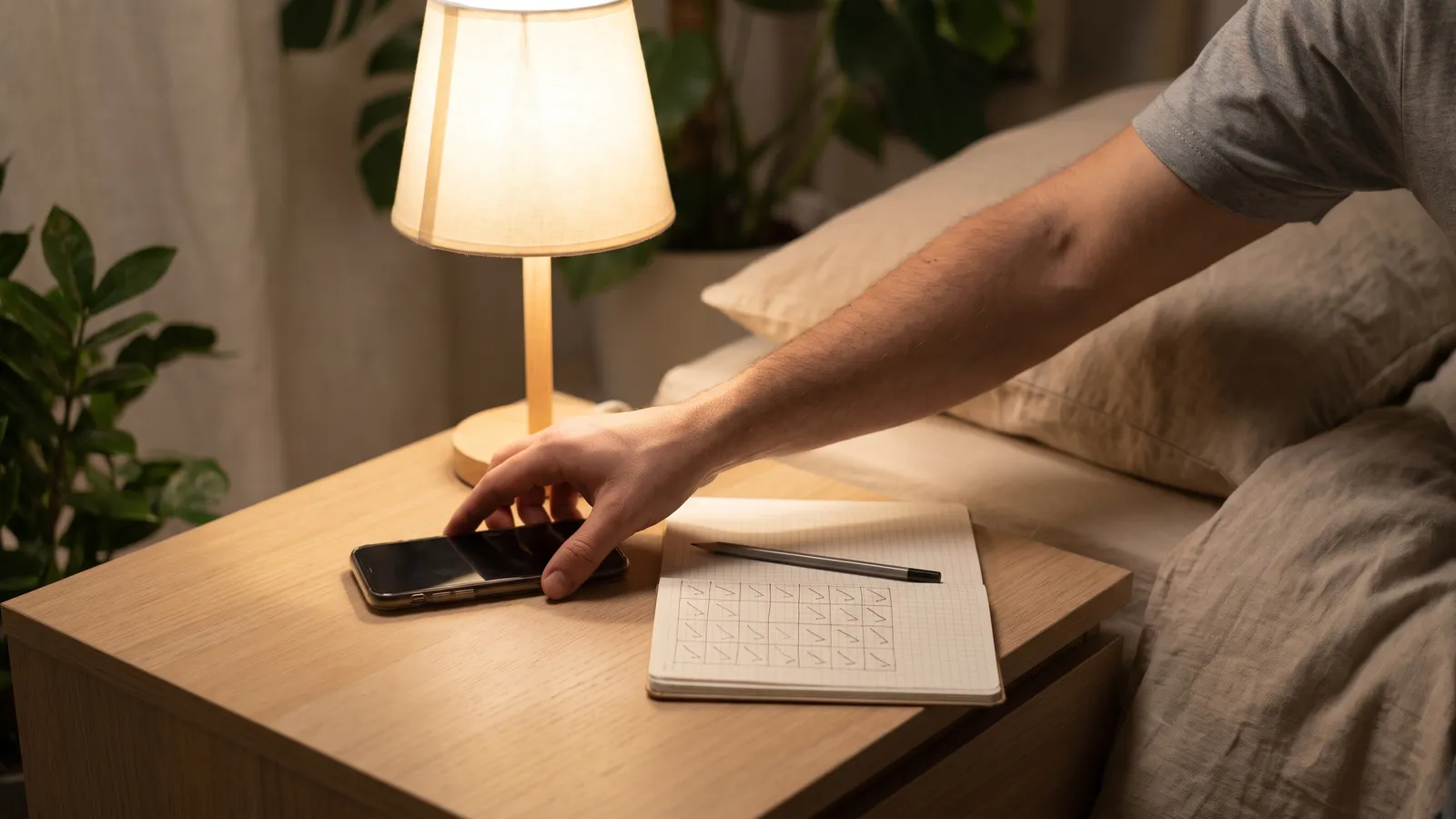
In the landmark study, people needed a median of 66 days to form a habit, even a simple one, and between 18 and 254 days from one person to the next. The “21 days” are a myth. A belief is something you track week by week, while you listen every day to positive affirmations you can believe.
In short
- In 2010, 96 students in London repeated a simple action every day for 12 weeks. Among the 39 with the clearest data, the action took 66 days at the median to become automatic, with a spread of 18 to 254 days (Lally and colleagues).
- The “21 days” come from a 1960 book in which plastic surgery patients needed about three weeks to adjust to how they now looked. Two authors of the 2010 study call the figure a myth.
- A belief, the sentence you carry about who you are, is better tracked with a score than with a date; according to author Joe Dispenza, four to six weeks of daily meditation on one aspect of yourself is generally enough before you move on to another.
| Key point | Value |
|---|---|
| A simple habit | 66 days at the median, from 18 to 254 (Lally, 2010) |
| The 21-day rule | a myth that started with a 1960 book |
| A belief | tracked over weeks, rated from 0 (not true) to 10 (completely true) |
Contents
How long does it take to form a habit?
Often more than two months. In the landmark study, a simple action repeated every day at the same time took a median of 66 days to become automatic: half the participants got there sooner, the other half later, anywhere from 18 to 254 days.
Sam feels guilty as soon as he sits down on a Sunday, and gets right back up to put things away. “I’m not allowed to rest,” he tells himself. He decides to listen to sentences written for that belief every night at bedtime. When will he do it without thinking? And when will the old sentence carry less weight?
Researchers have measured the answer to the first question. Lally and colleagues (2010) followed 96 students. Each one repeated an action of their choice, always at the same point in the day, like eating a piece of fruit with lunch. For 12 weeks, they rated every day how automatic the action felt. The researchers took the day each person reached 95% of the level where that feeling leveled off. Based on the 39 people whose progress was clear, that took a median of 66 days, ranging from 18 to 254 days; for the slowest, the calculation extends their curve beyond the 12 weeks.
For Sam, listening at bedtime plays the role of the fruit at lunch: the study tells him to expect weeks of effort that gets lighter as he goes.
What changes how long it takes
The action matters: drinking water became automatic faster than doing 50 sit-ups, according to two of the study’s authors and a colleague (Gardner, Lally and Wardle, 2012). In the logged visits of more than 30,000 gym members, the gym habit took a median of four to seven months to form; handwashing, among more than 3,000 healthcare workers, took about two weeks (Buyalskaya and colleagues, 2023). Sam’s action, short and always at the same time, has a head start.
Who said it takes 21 days to form a habit?
The figure comes from a 1960 book, Psycho-Cybernetics, by plastic surgeon Maxwell Maltz. According to two of the researchers behind the 2010 study, it rests on anecdotes: patients who’d had surgery took about three weeks to adjust to their new appearance. It had nothing to do with repeating an action, and those researchers call it a myth.
The figure still fuels promises of a reprogrammed subconscious in 21 days. But in the 2010 study, half the participants took longer than 66 days: if Sam still has to remind himself to listen on the 21st evening, he’s well within the norm. In HypnoSelf, 21 days of listening in a row earn the “Mental Anchor” badge, a sign that a habit is starting to take root.
Find your belief and reprogram it.
- You describe what holds you back
- The app writes your affirmations
- You record them in your voice
- You listen at bedtime
7 days free, no commitment
And how long does it take to change a belief?
There’s no single figure for everyone: it depends on the belief and on you, and you track it over weeks. A limiting belief, that sentence about who you are, settled in over years of lived experience: it loses its hold little by little, on no fixed schedule.
The 66 days measure when an action becomes automatic, while a belief feels more or less true depending on the moment. So for Sam, two clocks are running side by side: his evening listening habit, which Lally’s study sheds light on, and his belief, which he tracks with a score. How true does the old sentence feel to him, from 0 (not true at all) to 10 (completely true), when he sits down on a Sunday? He starts at 8.
Joe Dispenza, one of the authors who inspired HypnoSelf, gives a rough timeframe for his daily meditation: in general, “working on one particular aspect of yourself in your sessions for four to six weeks will likely bring enough results” for you to feel ready to move on to another part of yourself.
Weighing your belief against the facts, or testing it through a small experiment, can also weaken it: these are the steps to overcome a limiting belief. And if you’re still looking for the sentence that holds you back, the HypnoSelf conversation helps you find it, starting from situations you describe.
What should you watch for, week after week?
Three things, in this order: how much effort it takes to remember to listen, the evening it starts happening on its own, then how heavy the old sentence feels when the situation that triggers it comes back. The steps follow Sam; for you, each one may come sooner or later.
1. For the first few evenings, tie your listening to a set moment
Play your sentences right after something you do every evening, like turning off the light: the 2010 volunteers also linked their action to a cue.
Sam presses play once he’s under the covers. The first week, he forgets twice, and “I’m learning to let myself rest without having to justify it” still sounds strange to him. His score stays at 8. His sentences? The app wrote them from his own words, and he recorded them in his own voice.
2. After a missed evening, pick it back up the next night
According to the 2010 study, missing once barely matters: don’t let one slip turn into “I’ve blown it.” On the 12th evening, Sam gets home late from a birthday party and falls asleep without listening; the next night, he plays his sentences again.
3. At around three weeks, look at the habit first
Just ask yourself whether pressing play takes less effort than it did at first: judging your belief this early could discourage you. Around the 21st evening, Sam presses play without thinking about it, and the sentences sound less strange. His score: 7.
4. At around six weeks, check in during a real-life moment
About once a month, as Dispenza advises, rate your belief again when the situation comes up. One Sunday after lunch, Sam sits down with a book. The guilt rises, the dishes are calling, and he hears himself say, “They can wait.” He reads for an hour, with less of a knot in his stomach. His score: 6.

5. After 66 days, keep going even if your score goes back up
Don’t drop your evening listening: a belief has no finish line. By the 66th evening, listening is part of Sam’s bedtime routine. Then a friend drops by one Sunday and finds him stretched out on the couch: “You’re not doing anything today?” The old sentence comes back: his score climbs back to 7, then drops to 5.
HypnoSelf supports personal growth; it doesn’t replace help from a healthcare professional. If you’re going through a hard time, here’s who you can turn to.
Tracking your weeks with HypnoSelf
Sam’s path through the app, from the first evening on:
- Before the first listen. In the conversation, he described his Sundays and the guilt that gets him up off the couch; the AI assistant’s questions, one at a time, led him to “I’m not allowed to rest.” The app wrote him sentences like “I’m learning to let myself rest without having to justify it,” believable even with his score at 8, or “Sam, each week you’re giving yourself a few more breaks.” When a sentence felt too direct, the app replaced it with a more gradual one.
- Every evening. He plays these sentences, spoken in his own voice over background sounds, until the sleep timer turns them off.
- Over the weeks. The app logs every listen: his current streak of days in a row, his best streak and a calendar of the last 30 days where a missed evening is just an empty box. His badges, at 21 and then 66 days in a row, keep him going. HypnoSelf publishes the studies behind these milestones.
What Sam hopes to get from all this: staying on the couch on a Sunday without the old sentence pulling him back up.
Start the conversation. The conversation, your affirmations and your recording are free, no credit card needed. Listening then requires a card: it starts a 7-day free trial, cancel anytime before it ends, then a subscription.
Frequently asked questions
Does it take 21 days to form a habit?
Not as a rule. The 21-day idea, that a habit sets in within three weeks, comes from a 1960 book by plastic surgeon Maxwell Maltz, in which patients who had surgery grew used to their new look in roughly three weeks. Researchers who specialize in habits call it a myth.
Does it take 21 days or 90 days to form a habit?
Neither figure applies to everyone. In the landmark 2010 study, a simple action took a median of 66 days to become automatic, with individual times ranging from 18 to 254 days: under 90 days for some people, far more for others.
How many days does it take to form a habit?
In the landmark study, run in 2010 with 96 London students followed for 12 weeks, the median came to 66 days, and individual results ran from 18 to 254 days. A simple action, done every day at the same point in the day, takes root faster than a long routine.
Does it take 66 days to form a habit?
Not always: 66 days is a median, so half the participants in the landmark study (Lally, 2010) took longer, up to 254 days. For a gym habit, a 2023 study of more than 30,000 members found something closer to four to seven months.
HypnoSelf is an app for affirmations written from your own words, recorded in your own voice and heard as you wake up and fall asleep. This page was written by the HypnoSelf team.